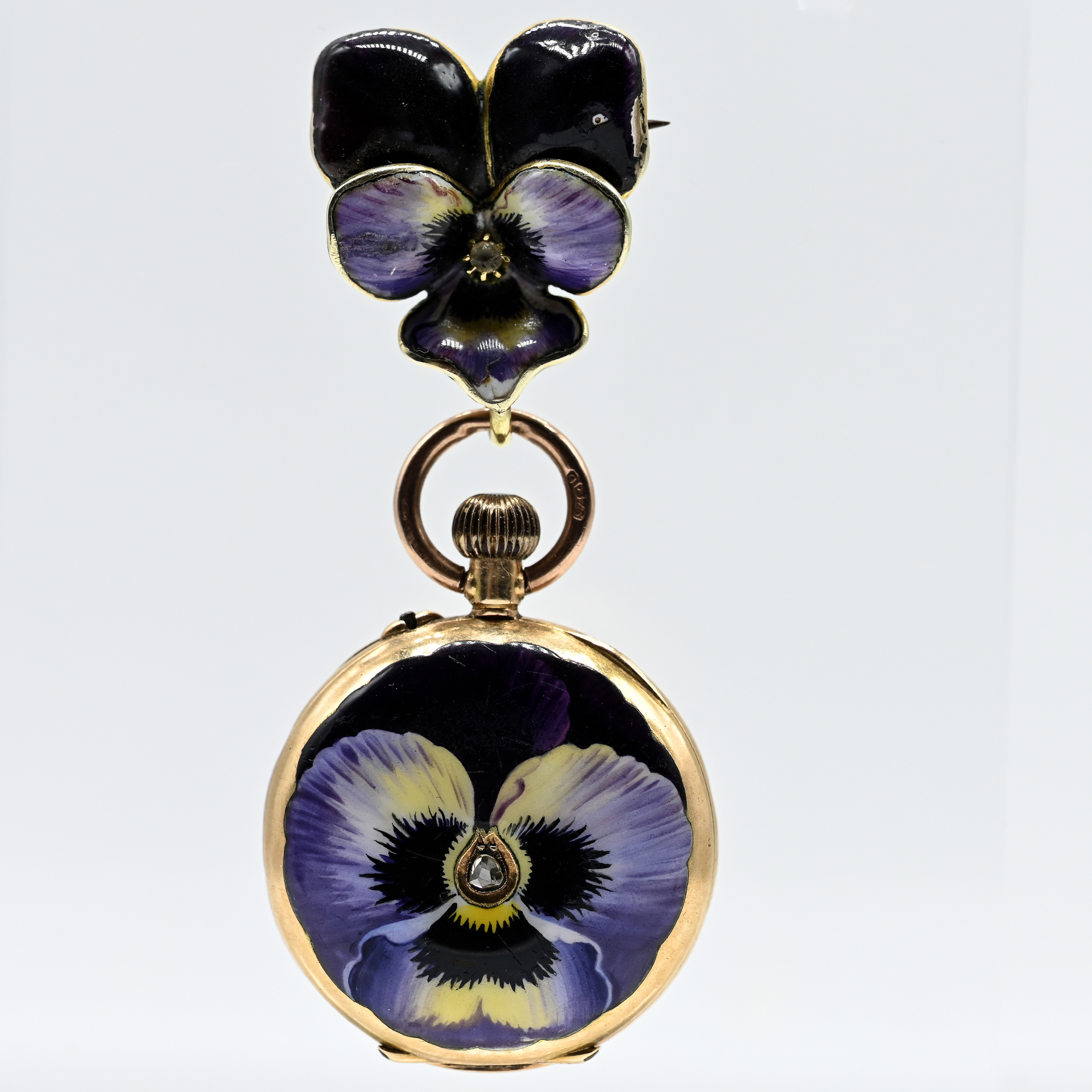
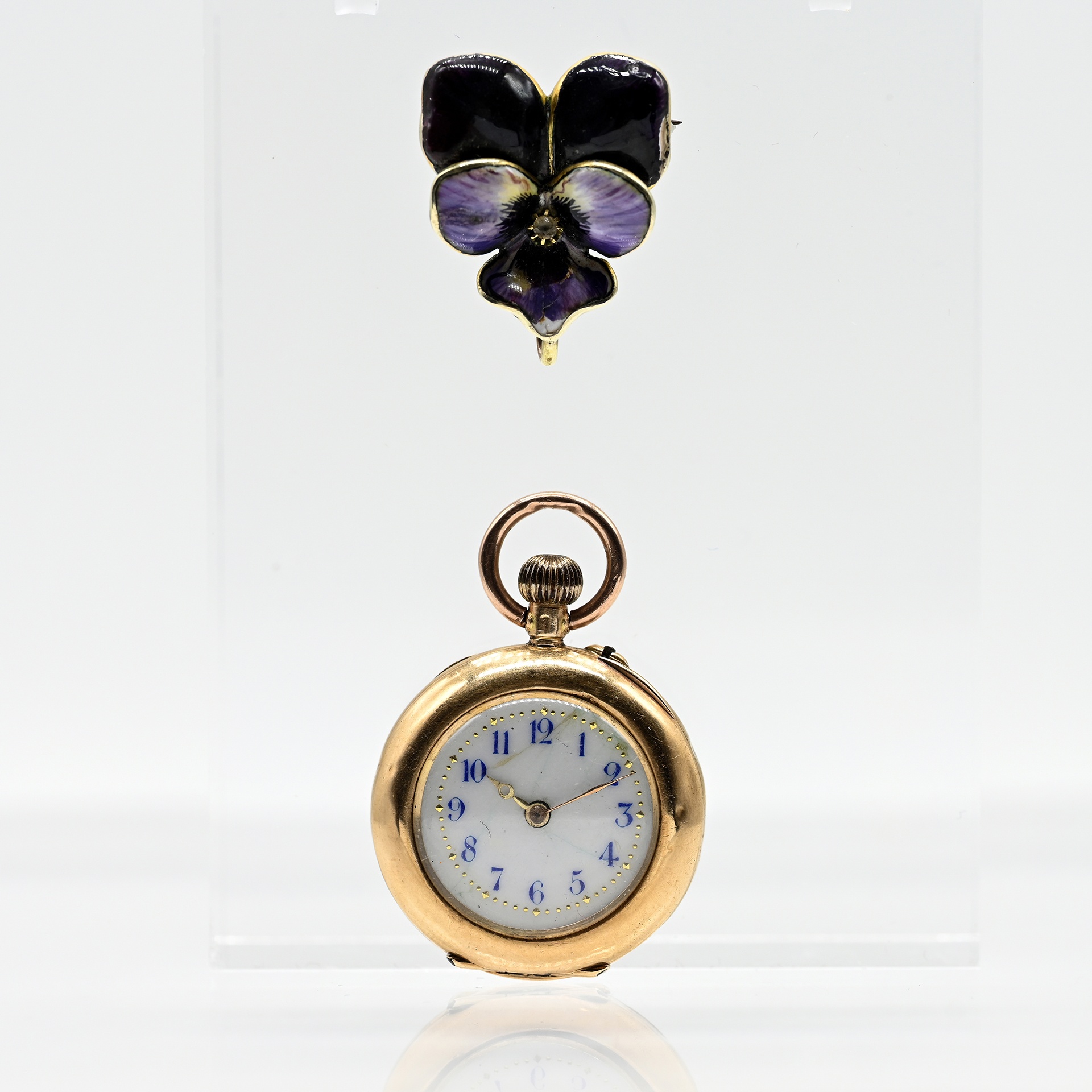
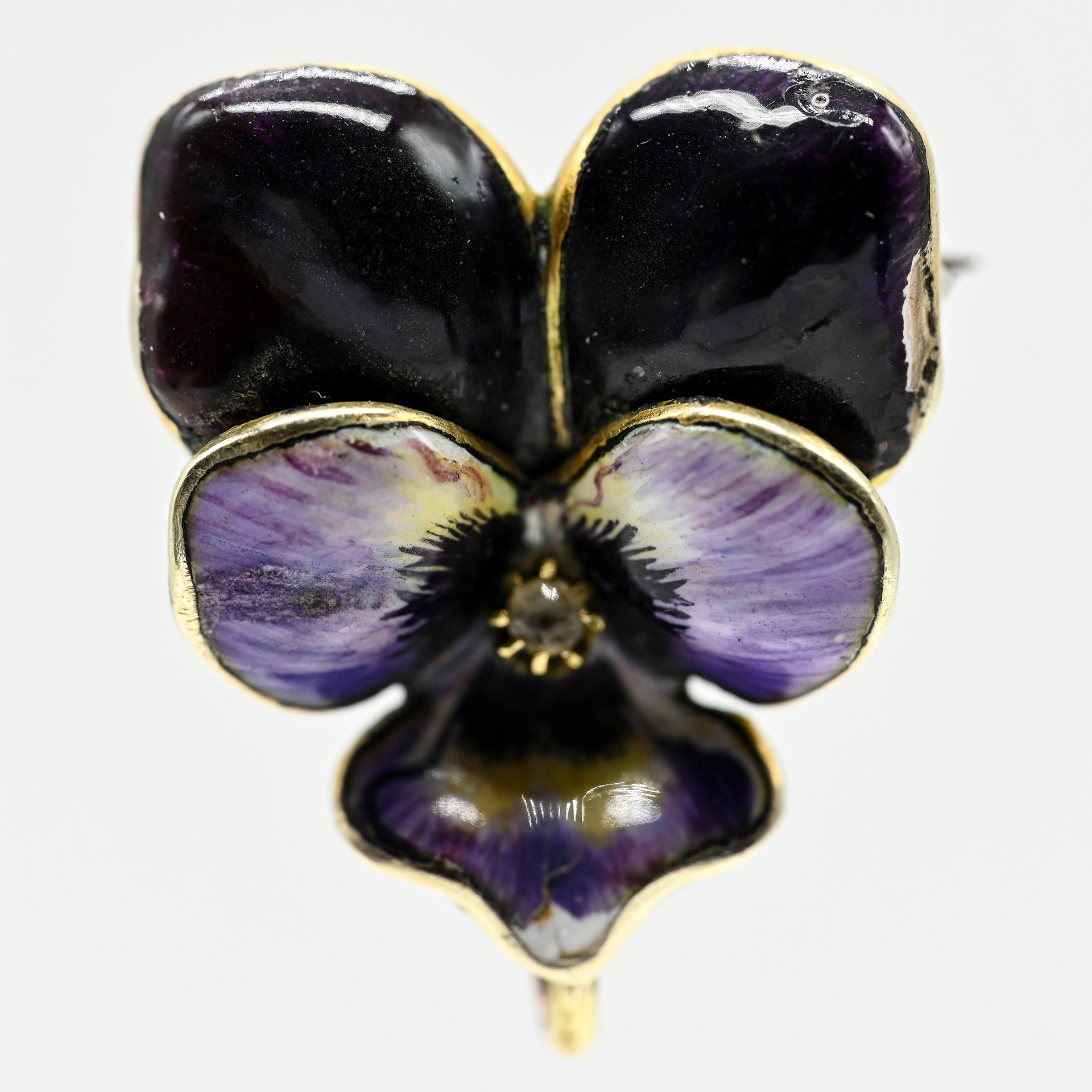
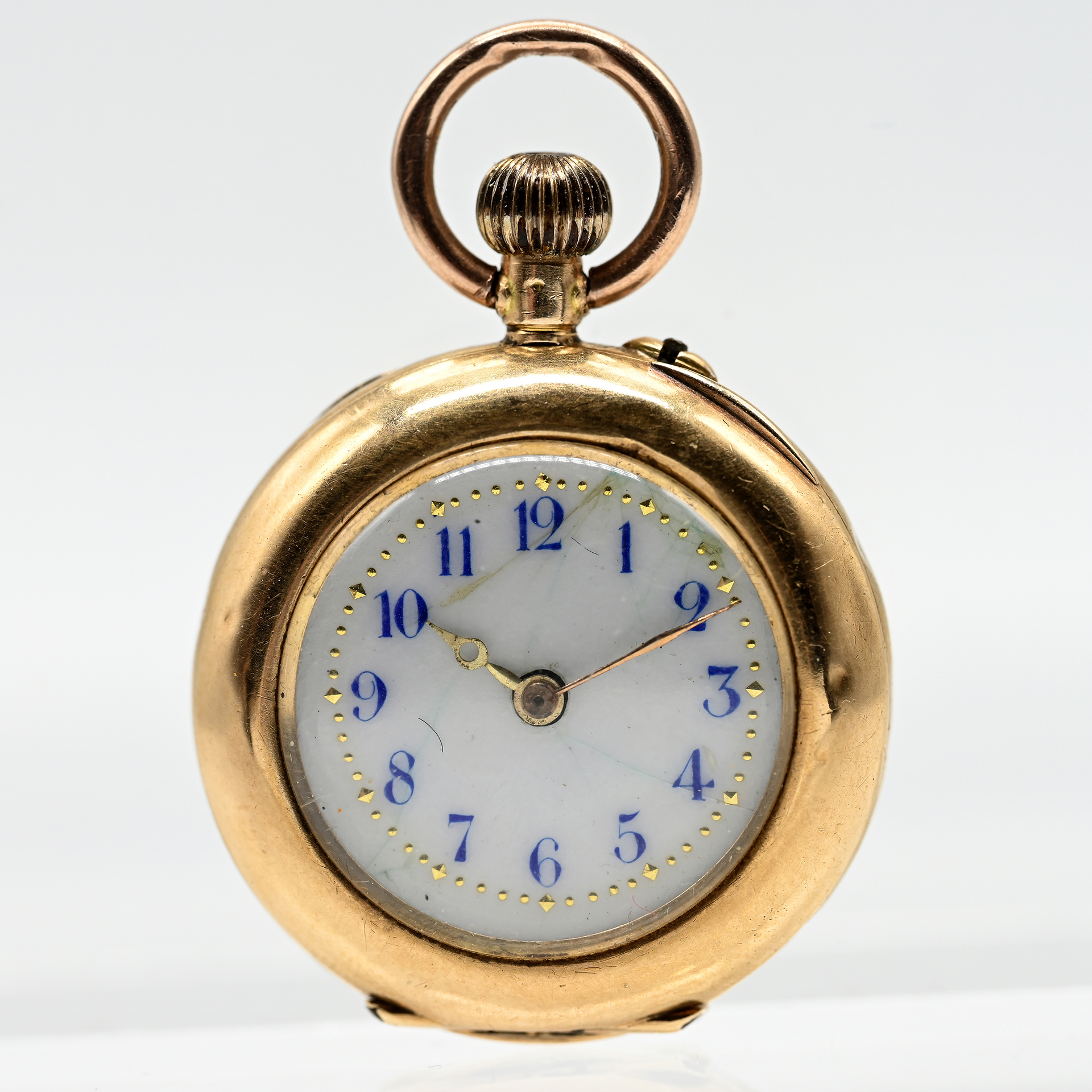
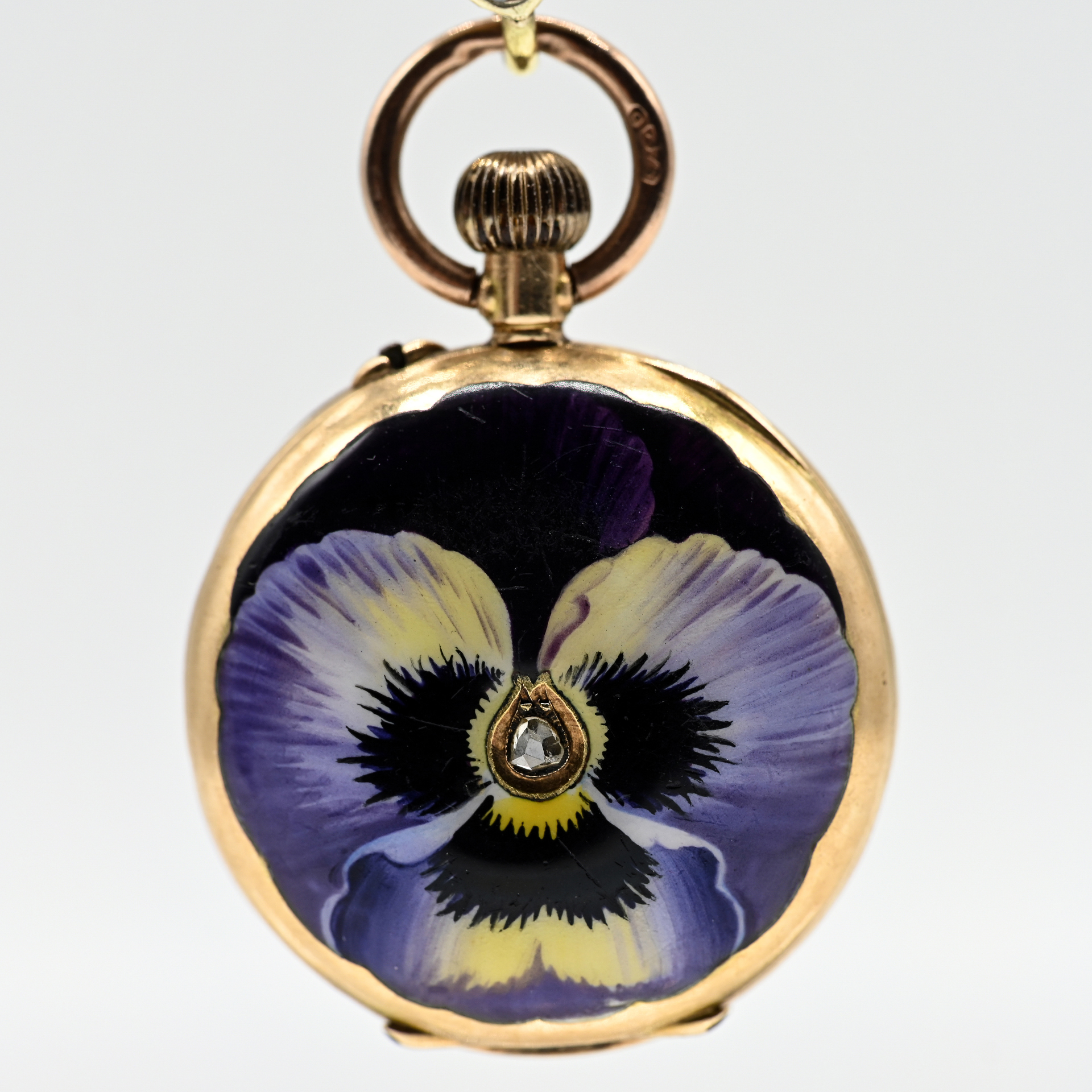
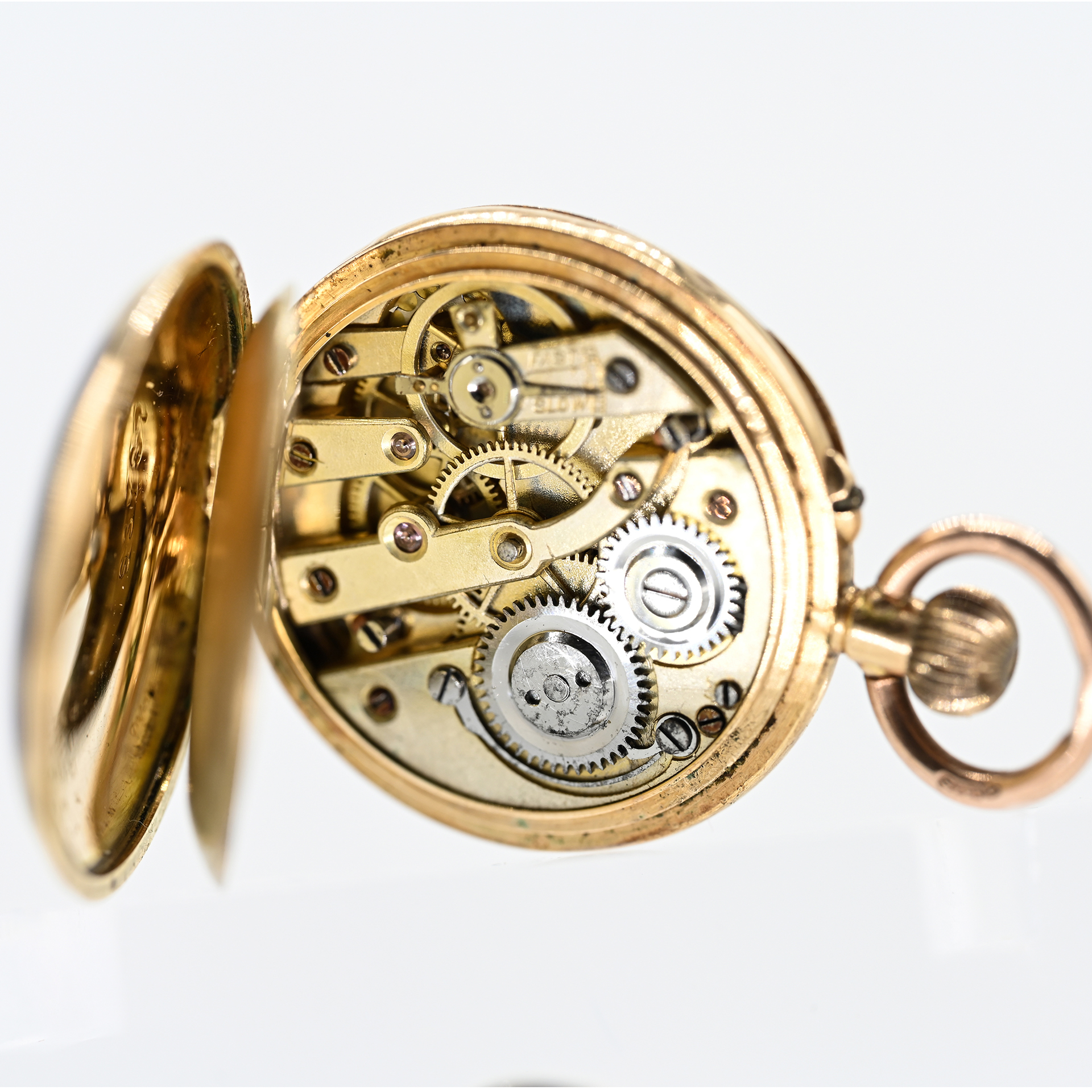
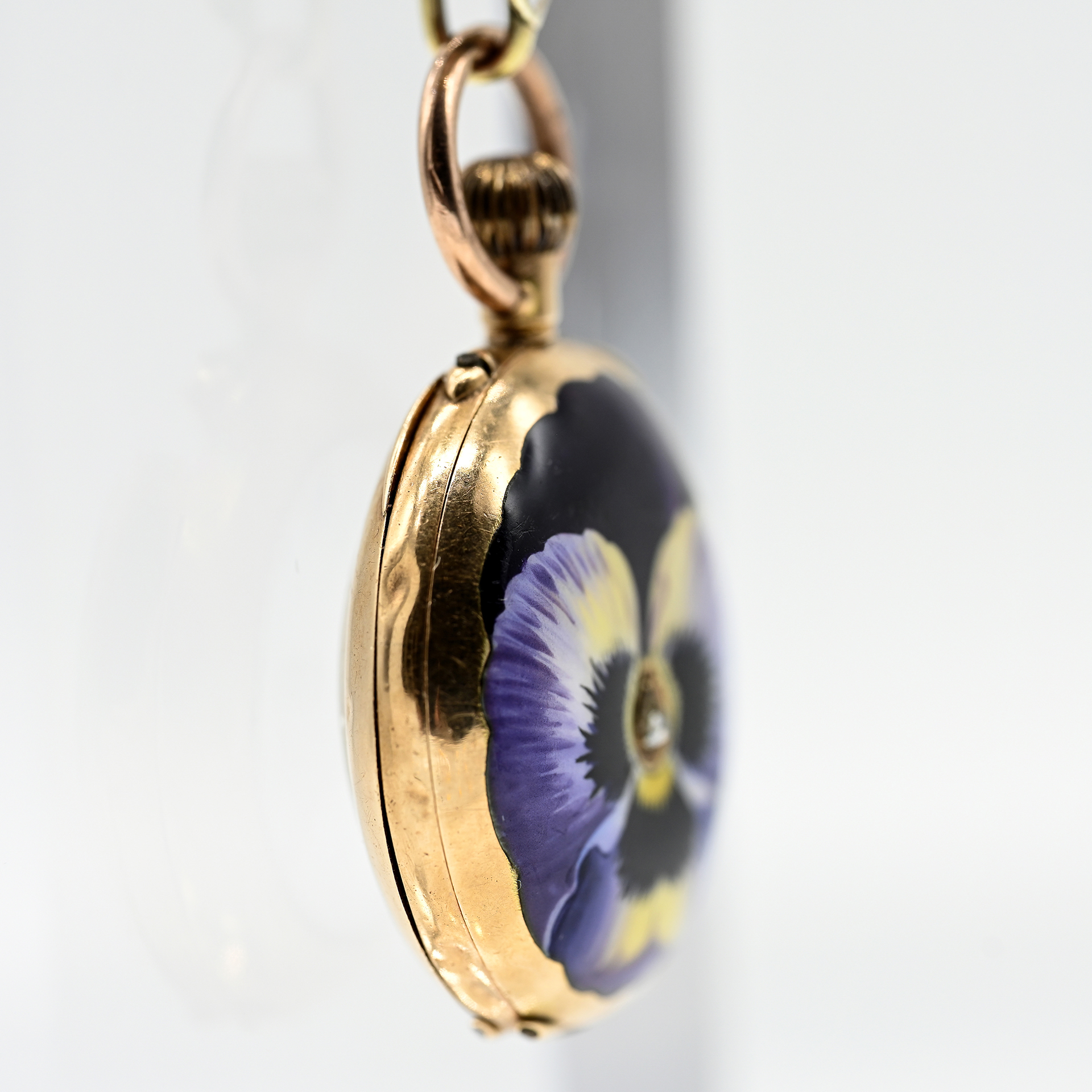
Schmucktaschenuhr an kleiner Brosche, Stiefmütterchen-Dekor mit polychromer Emaille und 2 kleinen Diamantrosen, Jugendstil, um 1900
Jewellery pocket watch attached to a small brooch, pansy motif with polychrome enamel and 2 small rose-cut diamonds, Art Nouveau, circa 1900
Gestempelt: 585/- und 375/- Gelbgold; Gesamtgewicht: ca. 20 g; Sprungdeckel aus goldfarbenem Metall; kleine Taschenuhr mit weißem Emaille-Zifferblatt, blauen arabischen Ziffern mit goldfarbenen Punkten konturiert; pfeilförmige Zeiger; auf dem rückseitigen Deckel Stiefmütterchenblüte, in polychromer Emaille gemalt, mit zentral gefasster kleiner Diamantrose; Taschenuhr eingehängt an einer kleinen Brosche, als plastische Stiefmütterchenblüte; Schau- und Rückseite mit polychromen Emaillefarben bemalt und mittig gefasster kleiner Diamantrose; Taschenuhrdurchmesser: ca. 26,2 mm; Broschenmaße: ca. 24,4 x 19,5 mm; Gesamtlänge: ca. 60 mm; Emaille mit diversen kleineren Bestoßungen; keine Garantie auf Werk- und Funktion.
Stamped: 585/- and 375/- yellow gold; total weight: approx. 20 g; spring-hinged cover in gold-coloured metal; small pocket watch with white enamel dial, blue Arabic numerals outlined with gold-coloured dots; arrow-shaped hands; on the reverse cover a pansy blossom painted in polychrome enamel, centrally set with a small rose-cut diamond; pocket watch suspended from a small brooch in the form of a sculptural pansy blossom; front and reverse decorated with polychrome enamel colours and centrally set small rose-cut diamond; pocket watch diameter: approx. 26.2 mm; brooch dimensions: approx. 24.4 x 19.5 mm; total length: approx. 60 mm; enamel with various small chips; no guarantee on movement or functionality.
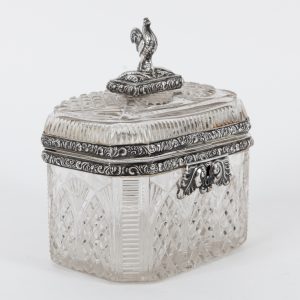
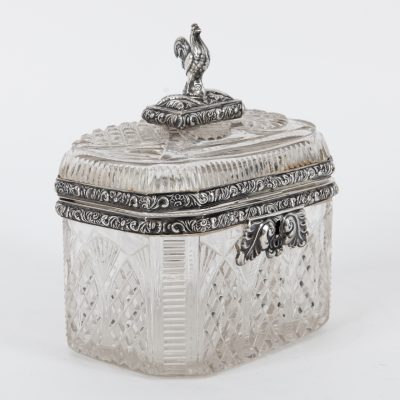
Silver alloy; total weight: approx. 926 g; octagonal sugar box made of crystal glass cut in various ornamental patterns, with silver rim mount and finial; straight-sided body with rear-hinged domed lid surmounted by a sculptural, stylised rooster finial; centrally inset keyhole to the front, key missing; age-related signs of wear and discolouration; dimensions: approx. 11 x 13.2 x 9.1 cm.
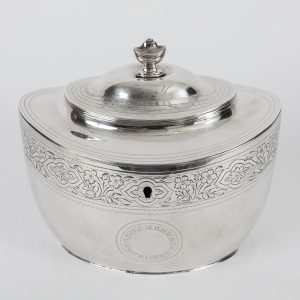
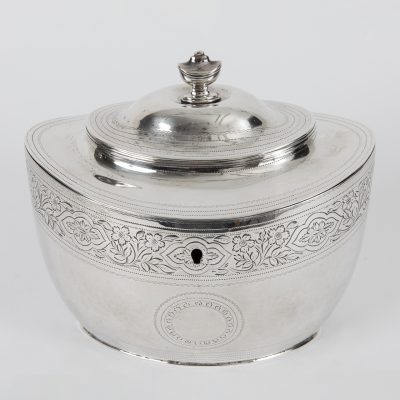
Sterling silver; weight: approx. 412 g; ovoid sugar box on a narrow foot ring with raised shoulder, hinged profiled lid at the rear and mushroom-shaped finial; centrally inset keyhole to the front, key missing; encircling border with floral decoration and chased linear ornament to the body, a circular reserve centred on both the front and reverse, the reverse engraved with the Latin motto “NEC TIMERE NEC TIMIDE”; lid with fine encircling chased decoration; age-related signs of wear, lid finial probably later added and showing an irregular depression; lid stamped with lion passant, underside stamped with lion passant, duty mark, London town mark, unidentified maker’s mark and date letter; dimensions: approx. 14.6 x 14.6 x 10.5 cm.
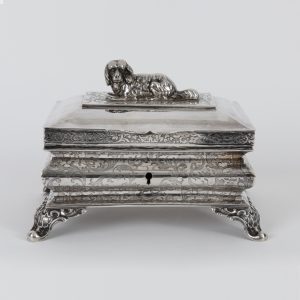
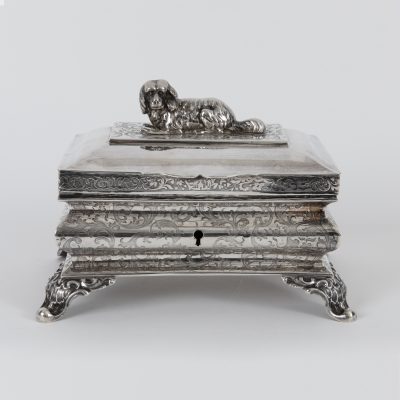
Silver alloy; weight: approx. 345 g; antique rectangular sugar box with curved sides, hinged stepped lid with finial in the form of a stylised Cavalier King Charles Spaniel and double scrolled thumb rests, standing on four scrolled volute feet, probably later applied; encircling finely chased floral decoration to the body; centrally inset keyhole to the front, key missing; underside with engraved numbering; dimensions: approx. 13 x 18 x 13 cm.
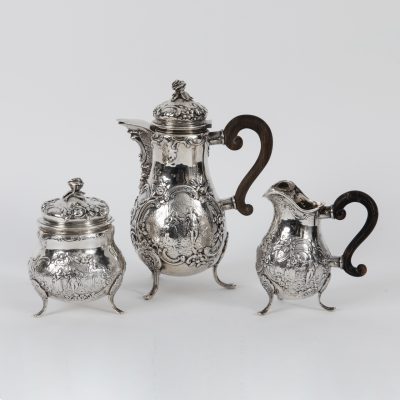
Silver alloy; total weight: approx. 1134 g; three-piece coffee service with encircling relief floral and rocaille decoration to the front and several large reserves with Watteau-style scenes: 1) Coffee pot with pear-shaped body on three splayed feet, scrolled ear handle of ebonised wood (upper attachment requires tightening), hinged domed lid with rose finial and high-set spout; height: approx. 22.5 cm. 2) Cream jug with pear-shaped body on three splayed feet, high-set scrolled ear handle of ebonised wood and broad spout; height: approx. 12.7 cm. 3) Sugar bowl with compressed globular body on three scrolled feet and removable lid with rose finial; height: approx. 13.2 cm. All pieces with age-related signs of wear; underside stamped with crowned Bourbon fleur-de-lis and two town or poinçon de charge marks “A” and “P” beneath a trefoil crown (see photos).